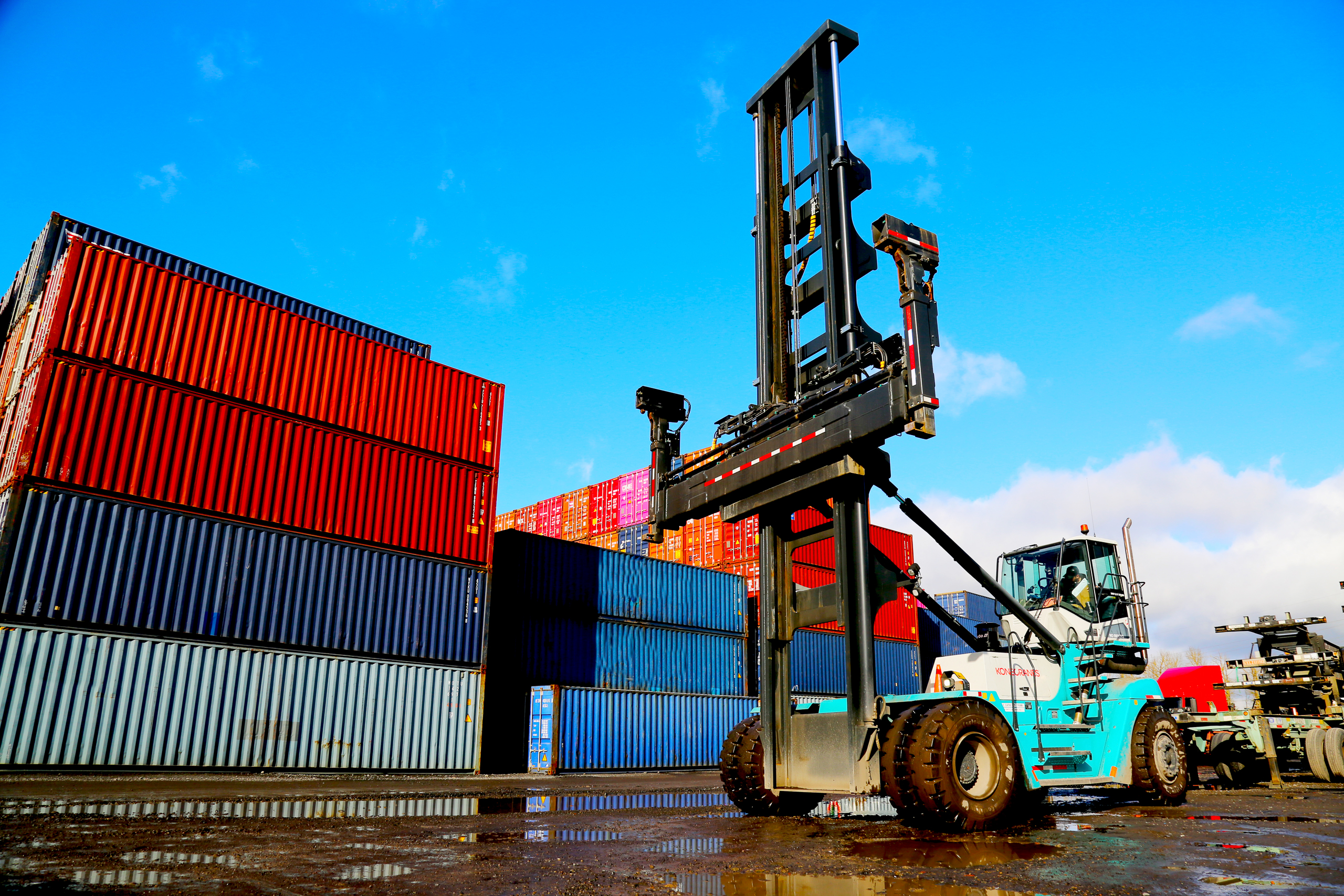
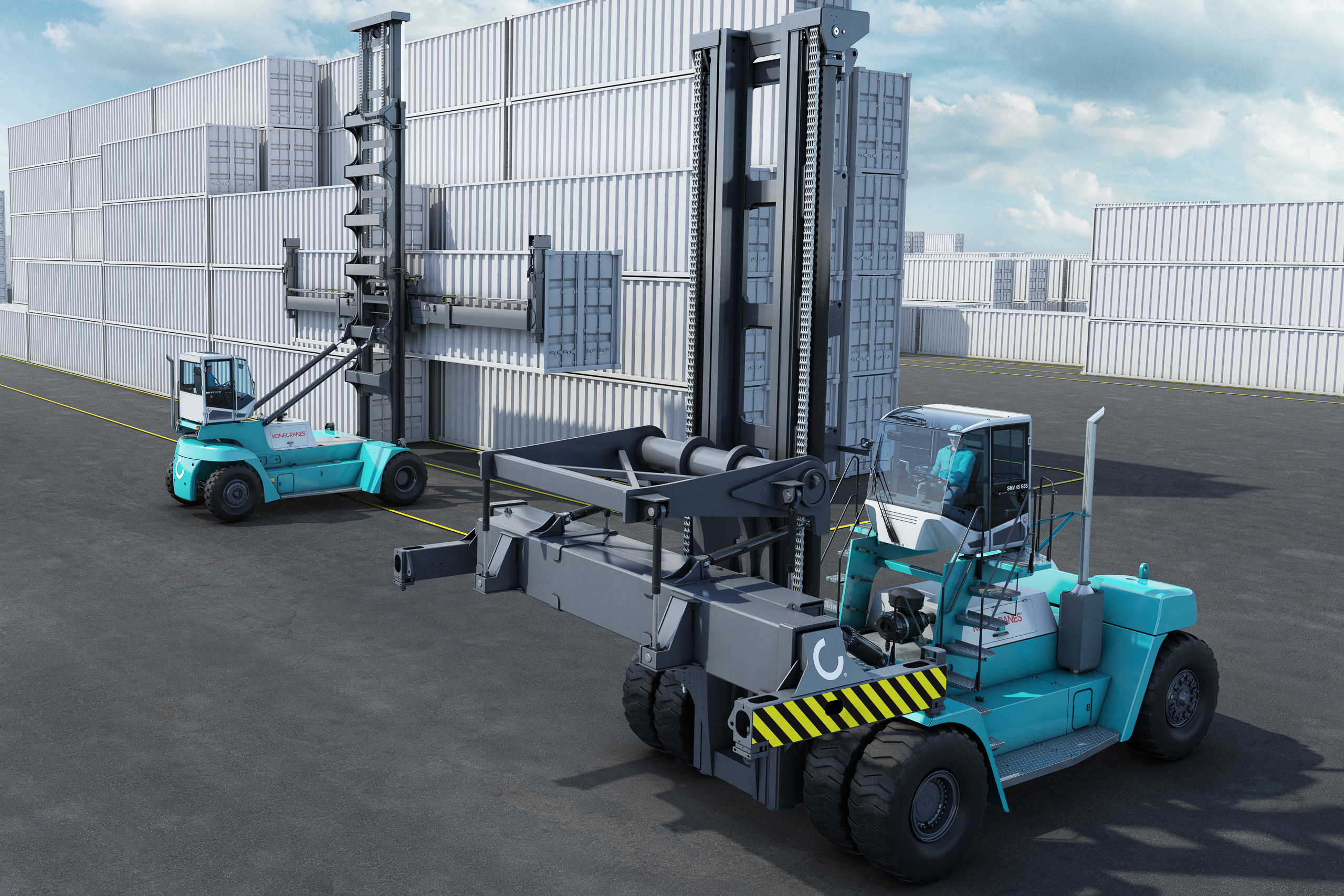
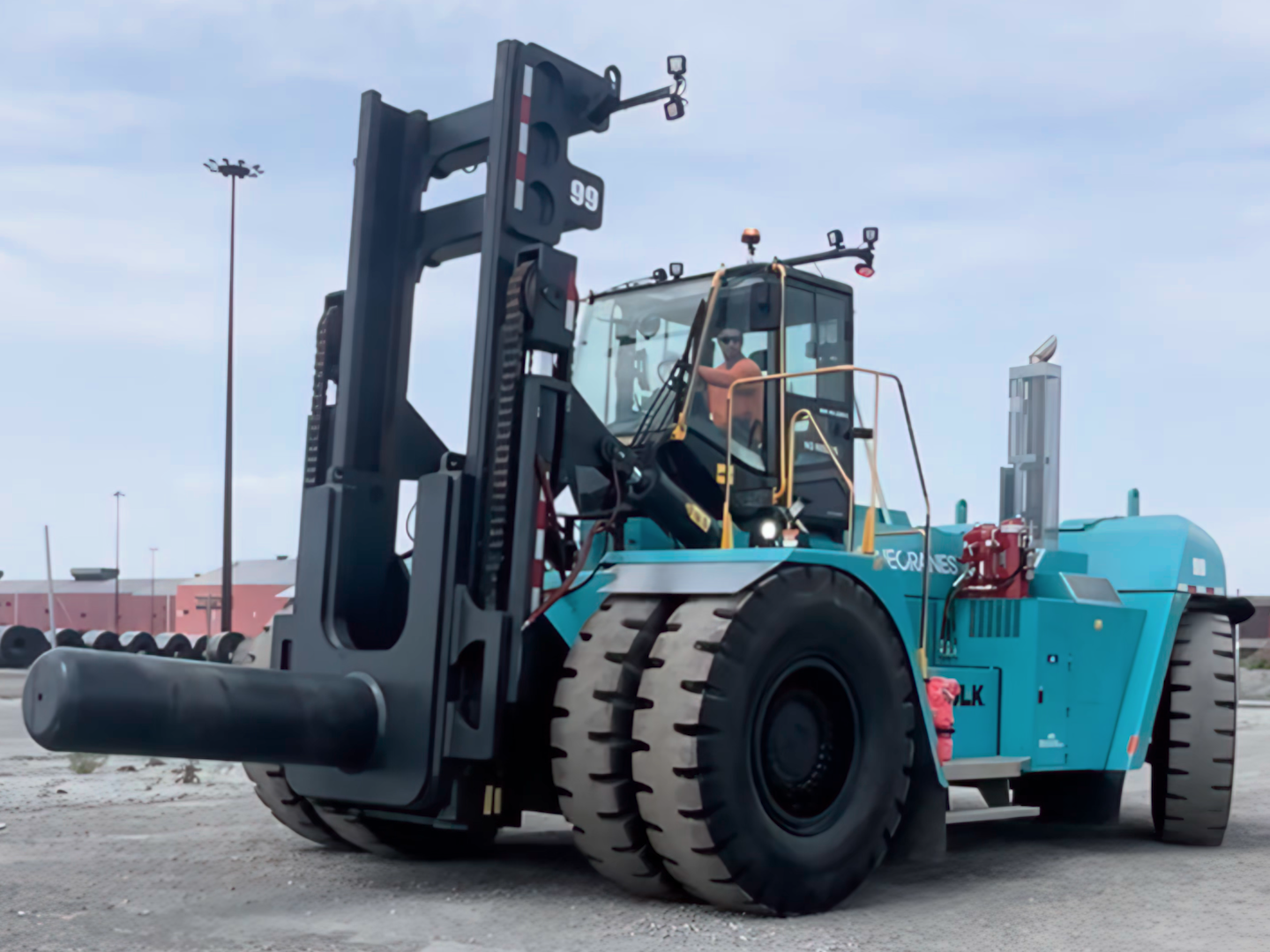
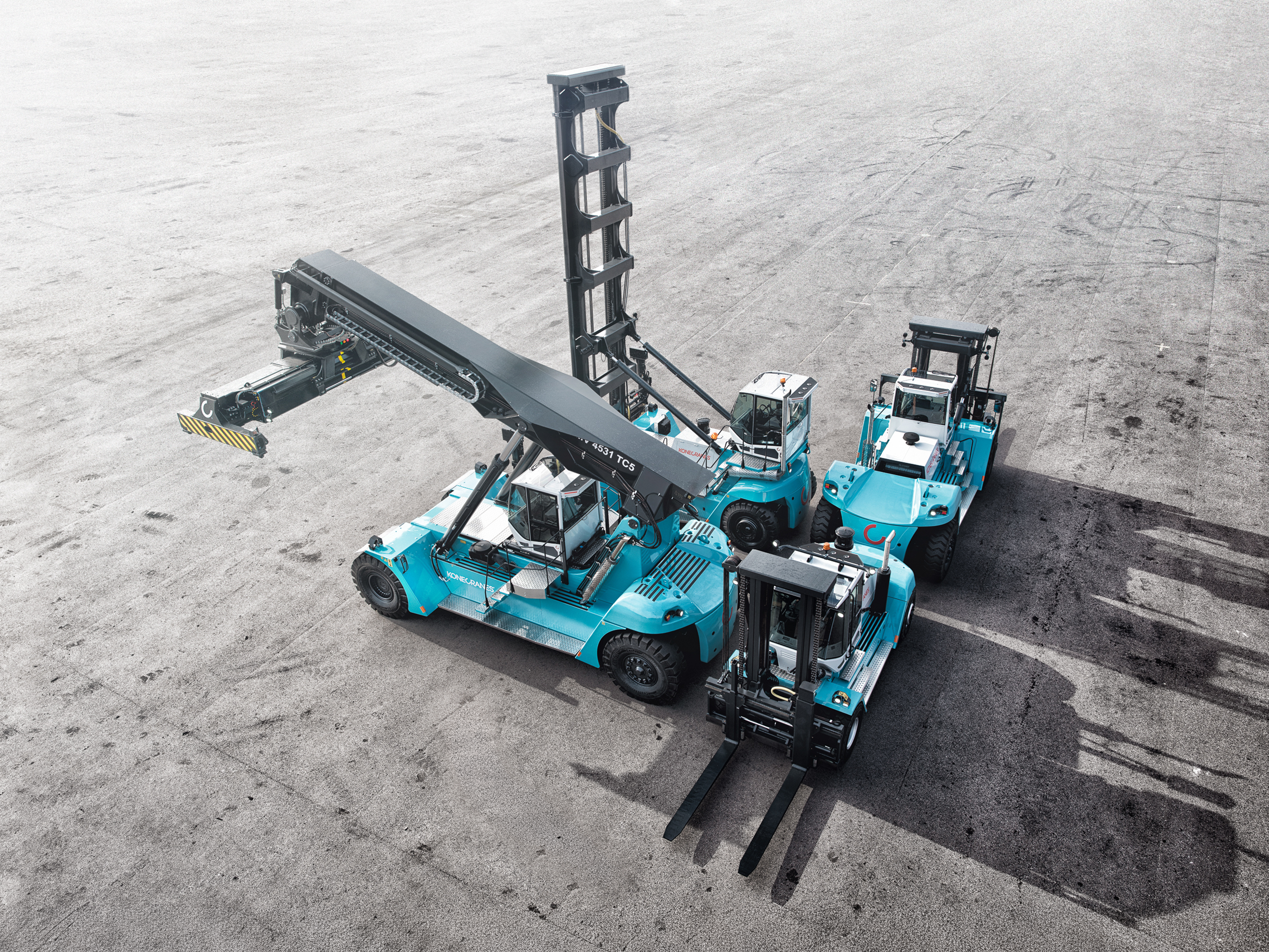
Konecranes lift trucks are renowned for quality design, advanced technology, and innovative solutions that have transformed the heavy lifting business.
Downtime costs you everything. Explore The Bulk Difference →
10-46 Ton Capacity
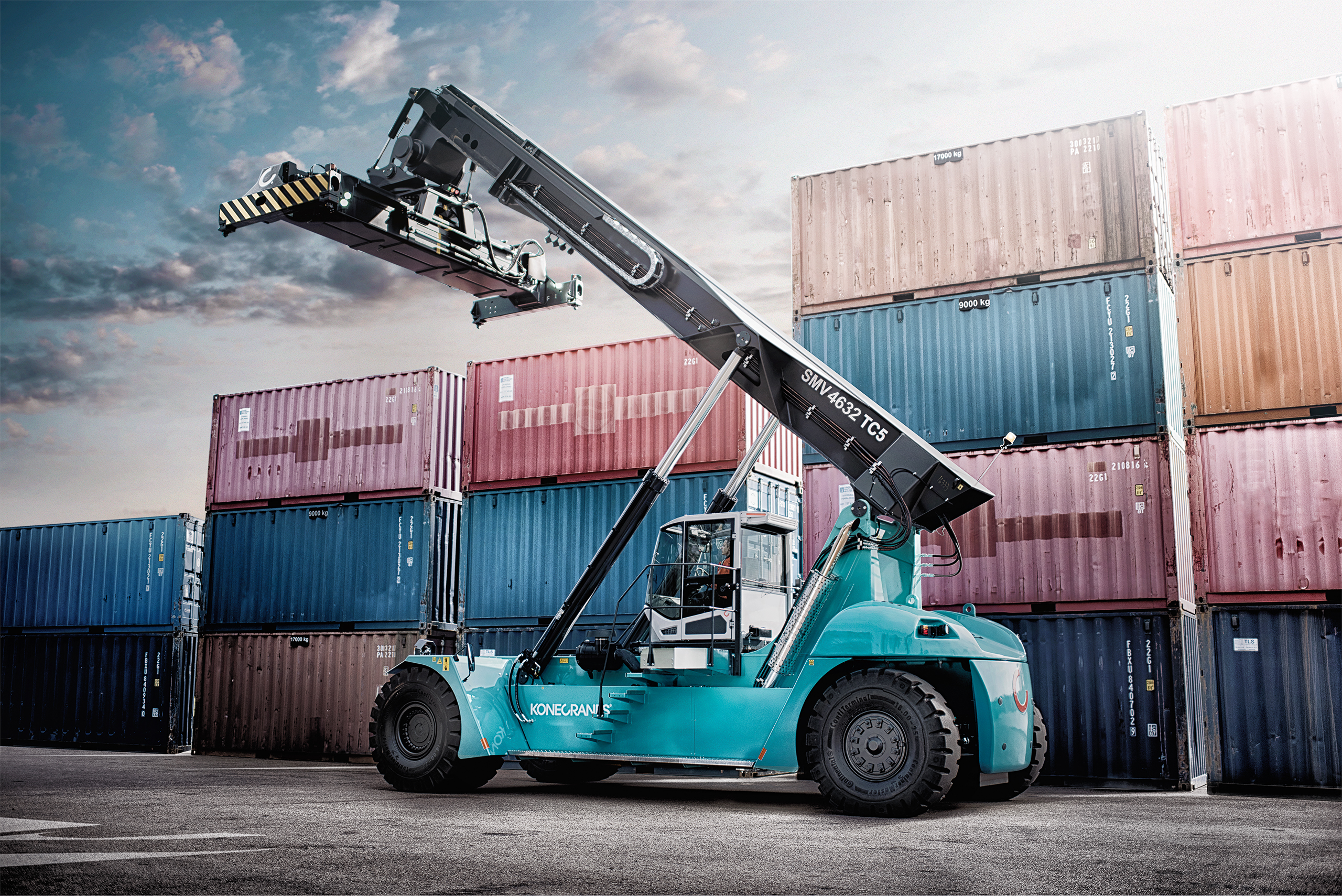
Konecranes reach stackers offer a wide range of movement for different kinds of materials handling. Our reach stackers are built around a strong box-type chassis and reliable components with a durable top-lift spreader. You get high handling rates, eco-efficiency and maximum uptime.
10-65 Ton Capacity
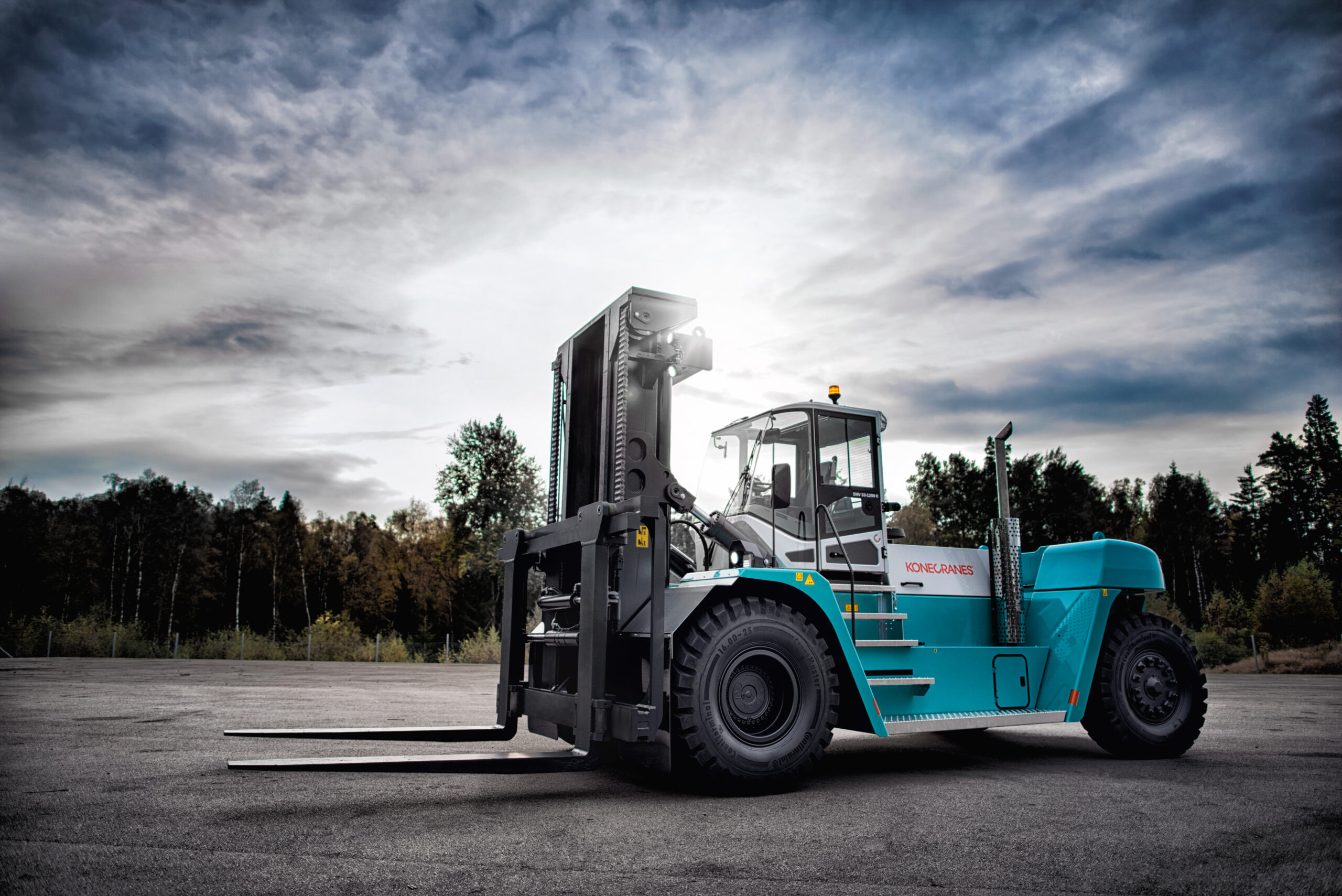
Konecranes forklifts utilize well-proven technology with innovative features to raise your materials handling productivity. The Liftace forklift is a reliable, sturdy workhorse, efficient and cost-effective with long-lasting quality
8-11 Ton Capacity
Konecranes empty container handlers can lift up to 8 containers high due to their powerful engine and wide mast.
Top Picks & Sideloaders
Konecranes loaded container handlers are stable and compact machines that can move your containers with just the right balance of efficiency and precision within your container handling process.
Konecranes Pillars
Safety Never Ends
Material handling is dangerous work, so safety is the number one priority every single day. Because no two sites are exactly the same, we offer a wide variety of safety options to help you to maximize the safety of the people working in your world.
Your Specific Needs
Whether you need one or one hundred, a standardized fleet or machines specially tailored for your unique challenges, the Konecranes lift truck portfolio is as varied as our customers’ requirements.
Total Cost of Ownership
The acquisition cost of your lift trucks is only a small part of the total cost of ownership (TCO). When making your purchase decision, you also need to take into account your running costs, including fuel, tires and rims, maintenance, replacement parts, repairs and labor. The TCO is the purchase value plus your running costs minus resale value when it comes time to upgrade.
Steel Mill Application (SMA) Front-End Loaders have the base of a tried and tested design with a reinforced frame, cab, and components in order to operate and handle molten steel and blast furnace slag. Designed to protect the operator and reduce the risks when handling molten slag, the front-end loader cab is fitted with impact- and heat-resistant glass. There is also a closed HVAC system to prevent the introduction of gases created when handling the molten slag.
The Straddle Carrier increases productivity for the customer by eliminating the use of flatcars to transport slabs throughout the mill. This asset decreases the number of times the slabs are handled by providing the ability to drive directly over top of the slabs, picking them up, and transporting them directly to the location of the customer’s needs. These machines can also pick and sort through slab piles, selecting specific slabs for their orders, and achieving just in time delivery.
The Pot Carrier is constructed to lift and carry a slag pot designed to the specific capacity of the steel maker’s furnace. It also provides the operator with additional safety features in an effort to further reduce the hazards and to allow for ease of handling and transporting the slag pot to an engineered dumping station.
The prime mover, or tractor, utilizes a scraper design and then updates the operator’s cab with the ability to face in the direction of operation. This improves visibility and increases productivity.

With a modified or purpose-built spreader replacing the container spreader, we hang magnets for slab handling and C-hooks or coil tongs for coil movements. When handling hot slabs, purpose-built slab tongs can withstand temperatures up to 1,100 degrees F are attached. Typical lifting capacity under the lifting device can range from 35 to 50 tons depending on attachment weight and configuration. However, there are manufacturers that are now building Reach Stackers with significantly more lifting capacity. As capacity goes up, maneuverability due to increased wheelbase goes down.
The first Continuous Transport System Bulk supplied to a customer was in 1999. This replaced multiple heavy-duty tractors and trailers along with the labor support required to operate the trucks. Not only were we able to save our customer significant expense by moving from multiple trucks, trailers and drivers to one single machine with one operator, but we were also able to decrease the carbon footprint by burning significantly less fuel while accomplishing the same or more productivity.